What is the standard kitchen counter height? A standard kitchen counter height is typically 36 inches (91.44 cm) from the floor to the top of the countertop.
This measurement is a cornerstone of kitchen design, influencing everything from how comfortably you can prepare meals to the overall flow and functionality of your culinary space. While 36 inches is the norm, there’s more to the story than just a single number. Factors like user preference, the height of base cabinets, and the addition of a countertop material all play a role in determining the final kitchen work surface height. This guide will delve into the specifics of standard countertop height, explore the countertop dimensions you’ll commonly encounter, and help you figure out what’s best for your home.
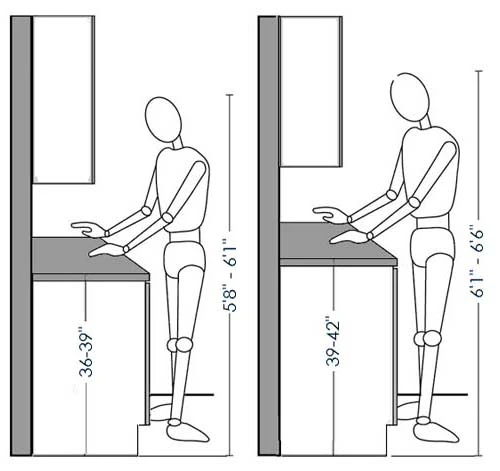
Image Source: www.regattaexports.com
The Foundations: Cabinetry and Countertop Height
The height of your base cabinets is the primary driver of your standard cabinet height, and subsequently, your kitchen counter height. Most standard kitchen cabinets are designed with a base height that, when a typical countertop is added, achieves that familiar 36-inch mark.
Base Cabinet Dimensions
- Standard Base Cabinet Height: Typically 34.5 inches (87.63 cm)
- Standard Base Cabinet Depth: Typically 24 inches (60.96 cm)
- Standard Base Cabinet Width: Varies widely, commonly from 9 inches (22.86 cm) to 48 inches (121.92 cm) in 3-inch increments.
These base cabinet dimensions are engineered to accommodate standard plumbing, electrical outlets, and to provide ample storage. The 34.5-inch height is crucial because it leaves space for the countertop material, which usually adds about 1.5 inches (3.81 cm) in thickness.
Countertop Thickness: The Final Layer
The thickness of your chosen countertop material is the final piece of the puzzle that brings the total kitchen counter height to its final, usable measurement.
- Laminate Countertops: Often around 1.5 inches (3.81 cm) thick.
- Granite, Quartz, and Marble Countertops: Typically range from 1.25 inches (3.18 cm) to 1.5 inches (3.81 cm) thick. Thicker slabs, like 2 inches (5.08 cm) or even 3 inches (7.62 cm), are available for a more substantial look but will naturally increase the overall kitchen counter height.
- Butcher Block Countertops: Can vary, but often fall within the 1.5-inch to 2-inch range.
When you combine the standard 34.5-inch base cabinet height with a 1.5-inch countertop, you arrive at the universally recognized 36-inch standard countertop height.
Why 36 Inches? The Ergonomics of Kitchen Design
The 36-inch average kitchen counter height isn’t an arbitrary number; it’s a carefully considered ergonomic standard developed over time to optimize comfort and efficiency in the kitchen.
Comfort and Efficiency
This height is generally considered ideal for a wide range of tasks:
- Chopping and Prep Work: Most adults can stand comfortably and chop vegetables or mix ingredients without excessive bending or reaching. This reduces strain on the back and shoulders.
- Kneading Dough: The 36-inch height provides a good leverage point for tasks like kneading dough or rolling out pastry.
- General Movement: It allows for easy movement around the kitchen, whether you’re reaching for ingredients, placing items on the counter, or moving between appliances.
Balancing Different User Heights
While 36 inches is the standard, it’s a compromise that works for a broad spectrum of people. Taller individuals might find it slightly low, requiring a bit more bending, while shorter individuals might find it a touch high, potentially needing to reach up. However, for the majority, it strikes a good balance for most kitchen activities.
Variations and Customization: Beyond the Standard
While 36 inches is the standard kitchen counter height, the world of kitchen design is rarely one-size-fits-all. Several factors can lead to variations.
Raised Countertops for Specific Tasks
Sometimes, you might see kitchen counter height variations within the same kitchen. For instance, a section of the countertop might be raised for a specific purpose.
- Baking Stations: Some bakers prefer a slightly lower counter for easier kneading and rolling.
- Breakfast Bars/Seating Areas: Integrated seating areas, often found on kitchen islands or peninsulas, are frequently at a different height to accommodate stools. This typically leads to a kitchen island height of around 42 inches (106.68 cm), often referred to as a bar height.
Accessibility Standards
For kitchens designed with accessibility in mind, there are specific standards that may differ from the typical 36-inch height.
- ADA Guidelines: The Americans with Disabilities Act (ADA) suggests accessible counter heights that can accommodate wheelchairs. This often means providing a section of countertop at around 30-34 inches (76.20-86.36 cm) with at least 27 inches (68.58 cm) of clear knee space underneath. This ensures a comfortable counter height for individuals using wheelchairs.
Custom Cabinetry and Countertops
Homeowners who opt for custom cabinetry or unique countertop materials might also find themselves with a kitchen counter height that deviates from the norm.
- Shorter or Taller Cabinets: If you choose base cabinets that are intentionally shorter or taller than the standard 34.5 inches, your final countertop dimensions will adjust accordingly.
- Thicker Countertops: As mentioned earlier, opting for thicker slabs of stone or custom-made butcher block will increase the overall kitchen counter height.
The Kitchen Island: A Special Case
Kitchen islands are often designed as multi-functional zones, and their height can reflect this. The kitchen island height can vary to serve different purposes, from prep work to casual dining.
Standard vs. Bar Height Islands
- Prep Zone Island: If the primary function of the island is food preparation, it often matches the main kitchen counter height of 36 inches. This creates a seamless work surface and allows for comfortable standing preparation.
- Dining/Seating Island (Bar Height): Islands designed with an overhang for seating are typically raised to 42 inches (106.68 cm). This is standard bar height and is comfortable for sitting at with bar stools.
- Counter Height Island: Some islands offer a compromise, sitting at 30-32 inches (76.20-81.28 cm), which is table height and comfortable for sitting with standard chairs.
Factors Influencing Island Height
- Seating: The primary driver for a raised island height is usually to accommodate seating. The overhang needs to be sufficient for legroom, and the height needs to be appropriate for the chosen seating.
- Work Surface Needs: If the island is also a primary prep area, keeping it at the standard 36 inches might be more practical for most users.
- Aesthetics: Sometimes, a slightly varied height can add visual interest to the kitchen layout.
Measuring Your Space: Finding Your Ideal Height
While we’ve discussed the standard, the best kitchen counter height for you might be slightly different. Here’s how to approach personalization.
Test Your Comfort
The best way to determine a comfortable counter height is to test it.
- Simulate Your Workflow: In your current kitchen (or a friend’s), stand at your counter. Chop an imaginary onion, roll out some imaginary dough, or simply rest your forearms comfortably.
- Assess Your Posture: Are you hunching over? Are you reaching too high? Does your back feel strained?
- Consider Your Height: If you are significantly taller or shorter than average, you may benefit from a custom height.
- For Taller Individuals: An extra inch or two on your countertop dimensions might provide more comfort. This could involve taller base cabinets or a thicker countertop.
- For Shorter Individuals: Lower base cabinets or thinner countertops could be an option. However, be mindful that very low counters can make standard appliance installations (like dishwashers) more complex.
Measuring for Renovation or New Build
If you’re planning a kitchen renovation or a new build, you have the most flexibility.
- Standard Approach: Start with the assumption of 36 inches kitchen counter height.
- Personalize: Use the testing methods above to see if any adjustments are needed for your household.
- Consult Professionals: Discuss your findings with your kitchen designer or contractor. They can advise on the feasibility of different heights, particularly concerning standard cabinet sizes and appliance clearances. They will help you solidify your countertop dimensions.
Common Questions About Kitchen Counter Height
Here are answers to some frequently asked questions about kitchen counter height.
Q: Can I easily change my existing kitchen counter height?
A: While not impossible, significantly altering the standard kitchen counter height of an existing kitchen can be complex and costly. It typically involves either replacing the base cabinets (which affects the standard cabinet height) or adding a substantial riser beneath them. If you’re looking for a slight adjustment, a thicker countertop material is the simplest solution.
Q: What if my kitchen counter height is too high or too low?
A: If your counter is too high, consider using a thicker countertop material on lower base cabinets, or look for specialized lower cabinets if you’re doing a full renovation. If it’s too low, you can install a thicker countertop or a countertop support system beneath your existing cabinets. For a more drastic change, new base cabinets would be required to alter the average kitchen counter height.
Q: What is the standard height for a kitchen island?
A: The standard kitchen counter height of 36 inches (91.44 cm) is common for island prep areas. However, islands intended for seating are often raised to a kitchen island height of 42 inches (106.68 cm) (bar height) or sometimes 30-32 inches (76.20-81.28 cm) (table height).
Q: What are typical countertop thicknesses in inches?
A: Typical countertop thicknesses are usually between 1.25 inches and 1.5 inches. This is important when calculating the final counter height inches from your base cabinets. Thicker options are available, often around 2 or 3 inches, for a more substantial look.
Q: How is counter height measured in centimeters?
A: The standard kitchen counter height of 36 inches converts to approximately 91.44 cm. Base cabinet heights are typically around 87.63 cm, with the countertop adding about 3.81 cm.
Q: Does the type of countertop affect the height?
A: Yes, the thickness of the countertop material directly impacts the final kitchen counter height. Thicker materials like some granites, marbles, or custom butcher blocks will result in a higher kitchen work surface height compared to thinner laminate or standard quartz.
Q: What is considered a comfortable counter height for most people?
A: A comfortable counter height is generally considered to be around 36 inches (91.44 cm) for general prep work. However, individual comfort can vary based on personal height and specific tasks.
Conclusion: Finding Your Kitchen’s Sweet Spot
The standard kitchen counter height of 36 inches (91.44 cm) is a well-established benchmark for a reason: it balances ergonomics, functionality, and widespread usability. This average kitchen counter height is achieved through the combination of standard base cabinets and a typical countertop thickness.
However, your kitchen is your personal space. Whether you’re aiming for a perfectly ergonomic prep zone, a practical island for dining, or a fully accessible kitchen, don’t be afraid to consider variations. By paying attention to countertop dimensions, base cabinet heights, and the thickness of your chosen materials, you can ensure your kitchen work surface height is not just standard, but perfectly suited to your needs, making every moment spent in your kitchen a pleasure.