The cost to install a backsplash in a kitchen can range from a few hundred dollars to several thousand, depending on material choices, the complexity of the installation, and whether you hire a professional or opt for a DIY approach.
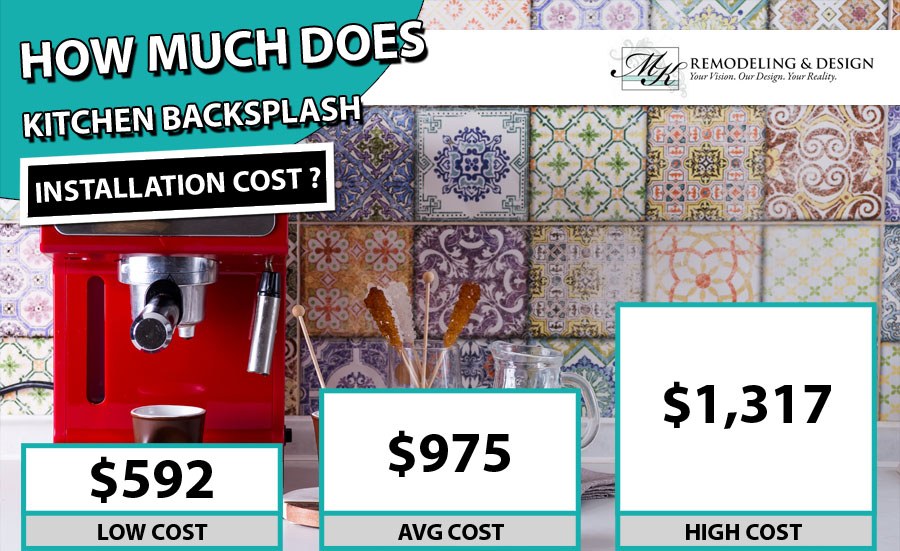
Image Source: mkremodeling.com
Cost To Install Backsplash In Kitchen: What You’ll Pay
Revitalizing your kitchen often involves a new backsplash. It’s a fantastic way to inject personality, color, and style into your cooking space. But beyond the aesthetic appeal, the practical question of cost looms large. How much does it truly cost to install a kitchen backsplash? This in-depth guide will help you budget and plan your project, covering everything from material prices to labor expenses.
Gauging Your Kitchen Backsplash Installation Cost
When you’re thinking about the kitchen backsplash installation cost, it’s important to break it down. Several factors contribute to the final price tag. These include the material you choose for your backsplash, the size of the area you need to cover, the complexity of the design, and whether you’ll be doing the work yourself or hiring a professional.
Deciphering Backsplash Material Prices
The biggest determinant of your overall cost will likely be the backsplash material itself. Different materials offer varying aesthetics, durability, and price points.
Popular Backsplash Materials and Their Costs
-
Ceramic Tile: This is often the most budget-friendly option. Ceramic tiles are widely available in a vast array of colors, patterns, and sizes.
- Cost: Typically ranges from $1 to $7 per square foot.
- Pros: Affordable, easy to cut and install, good variety.
- Cons: Can chip or crack if hit hard, less durable than porcelain or stone.
-
Porcelain Tile: Similar to ceramic but fired at higher temperatures, making it denser, harder, and more water-resistant.
- Cost: Generally ranges from $2 to $15 per square foot.
- Pros: Very durable, water-resistant, can mimic the look of natural stone or wood.
- Cons: Can be harder to cut, heavier than ceramic.
-
Glass Tile: Offers a sleek, modern look and can make a small kitchen feel larger due to its reflective properties. Available in various forms, including mosaic sheets, subway tiles, and large format pieces.
- Cost: Varies widely, from $5 to $30+ per square foot.
- Pros: Water-resistant, easy to clean, reflective, wide range of colors and finishes.
- Cons: Can be prone to chipping or scratching, some types require specialized installation techniques.
-
Natural Stone (Marble, Granite, Travertine, Slate): Provides a luxurious, high-end look. Each stone has unique veining and patterns.
- Cost: Marble can range from $5 to $30+ per square foot. Granite might be $3 to $15 per square foot. Travertine and slate are often in the $3 to $10 per square foot range.
- Pros: Unique natural beauty, durable (especially granite), adds significant value to a home.
- Cons: Can be expensive, porous (requires sealing to prevent staining), heavier and harder to cut, some stones are prone to etching.
-
Metal Tile (Stainless Steel, Aluminum, Copper): Offers a modern, industrial, or sleek aesthetic. Available in sheets, squares, and decorative patterns.
- Cost: Typically $5 to $25 per square foot.
- Pros: Durable, easy to clean, resistant to heat and stains, contemporary look.
- Cons: Can scratch or dent, fingerprints can be an issue, can be more challenging to cut.
-
Peel-and-Stick Backsplash: A popular DIY option for its ease of installation. These are often made from vinyl, faux tile, or thin metal.
- Cost: Ranges from $2 to $10 per square foot.
- Pros: Very easy to install, affordable, can update a kitchen quickly, no special tools needed.
- Cons: Durability can be an issue, may not look as high-end as real tile, adhesive may fail over time or leave residue.
-
Quartz Backsplash: A more premium option, often used when homeowners want a seamless look with their quartz countertops.
- Cost: Can be $20 to $50+ per square foot, often purchased as a slab.
- Pros: Extremely durable, non-porous, seamless look.
- Cons: Very expensive, heavy, requires professional installation.
Considering the Tile Backsplash Cost
For many, a tile backsplash cost is the most common benchmark. The price of the tiles themselves is just the beginning. You also need to factor in:
- Grout: Essential for filling the spaces between tiles. Prices vary based on type (sanded, unsanded, epoxy).
- Thin-set Mortar or Adhesive: The bonding agent that holds the tiles to the wall.
- Sealer: Especially important for natural stone and porous tiles to prevent staining.
- Caulk: For sealing edges and transitions.
These additional materials typically add $0.50 to $3.00 per square foot to the total cost.
Labor Cost for Kitchen Backsplash Installation
This is often the second largest component of the total kitchen backsplash installation cost. The labor cost for kitchen backsplash work depends on several factors:
Professional Installation vs. DIY
-
Professional Installation: Hiring a qualified tile setter or general contractor ensures a clean, durable, and aesthetically pleasing result. They have the tools, experience, and knowledge to handle various materials and potential challenges.
- Average Cost: Professional installation typically costs between $20 to $60 per square foot, but this can fluctuate based on location and the complexity of the job. This cost usually includes basic prep work and the installation itself.
-
DIY Installation: If you’re handy and have the time, doing it yourself can save a significant amount on labor. However, be realistic about your skills. A poorly done backsplash can be more costly to fix than hiring a pro initially.
- Savings: You can save anywhere from $15 to $50+ per square foot by tackling the project yourself.
Factors Affecting Labor Costs
- Complexity of the Design: Intricate patterns, herringbone layouts, or backsplashes that extend behind appliances will increase labor time and cost.
- Wall Preparation: If your walls are uneven, damaged, or require special backer board, this adds to the labor.
- Number of Outlets and Switches: Each outlet or switch requires careful cutting around, which is time-consuming for the installer.
- Type of Tile: Some tiles, like glass mosaics or natural stone, require more delicate handling and specialized techniques, increasing labor costs.
- Location: Labor rates vary significantly by region. Major metropolitan areas often have higher costs.
- Adhesive and Grout Type: Epoxy grouts, for example, are more expensive and harder to work with than standard cementitious grout, which will be reflected in labor costs.
The Average Backsplash Installation Price
So, what’s the average backsplash installation price? For a standard ceramic or porcelain tile backsplash, including materials and professional labor, you might expect to pay anywhere from $30 to $100 per square foot.
Let’s look at some common scenarios:
-
Budget-Friendly Ceramic Tile:
- Material Cost: $1 – $4 per sq ft
- Labor Cost: $20 – $40 per sq ft
- Total Estimated Cost: $21 – $44 per sq ft
-
Mid-Range Porcelain or Glass Tile:
- Material Cost: $5 – $15 per sq ft
- Labor Cost: $30 – $50 per sq ft
- Total Estimated Cost: $35 – $65 per sq ft
-
High-End Natural Stone or Designer Tile:
- Material Cost: $15 – $30+ per sq ft
- Labor Cost: $40 – $60+ per sq ft
- Total Estimated Cost: $55 – $90+ per sq ft
These are broad estimates, and individual project costs can fall outside these ranges.
Cost to Install Subway Tile Backsplash
Subway tile is a classic and popular choice, known for its clean lines and versatility. The cost to install subway tile backsplash is generally on the more affordable side, especially if you opt for ceramic subway tiles.
- Ceramic Subway Tile: Expect to pay $1 to $5 per square foot for the tiles.
- Labor: Installation is relatively straightforward, so labor might be on the lower end of the professional installation range, perhaps $20 to $35 per square foot.
- Total: A budget-friendly subway tile backsplash can be installed for roughly $21 to $40 per square foot.
If you opt for glass or marble subway tiles, the material cost will increase significantly, pushing the total cost higher.
Cost of Granite Backsplash Installation
A granite backsplash is a premium choice, often installed as a full slab or as coordinating tiles that match granite countertops. The cost of granite backsplash installation reflects the material’s expense and the skill required to work with it.
- Granite Tiles: $3 to $15 per square foot.
- Granite Slabs: Can range from $20 to $50+ per square foot for the material alone, depending on the type and rarity of the granite. Installation for slabs is more involved.
- Labor: Because granite is heavy and requires precise cuts, professional labor can be higher, perhaps $30 to $60+ per square foot. Working with slabs is more complex and costly than tiles.
- Total: A granite tile backsplash might cost $33 to $75 per square foot. A full granite slab backsplash could easily reach $50 to $110+ per square foot.
Additional Costs to Consider for Your Project
Beyond the tiles and labor, there are other expenses to include in your budget for kitchen backsplash project.
Backsplash Removal and Installation Cost
If you’re replacing an existing backsplash, you’ll need to factor in the backsplash removal and installation cost.
- Removal: This can cost anywhere from $50 to $300 or more, depending on how the old backsplash is attached (adhesive, mortar) and the complexity of removal. A professional might charge $20-$40 per hour for removal.
- Disposal: There might be fees for disposing of the old material.
- Prep Work: After removal, the wall may need patching, sanding, or priming, adding to labor costs.
Other Potential Expenses
- Under-cabinet Lighting: If you plan to install new lighting, factor in the cost of fixtures and electrician fees.
- Specialty Tools: If you’re doing a DIY installation, you might need to rent or purchase specific tools like tile cutters, nippers, or grout floats.
- Sealing: Natural stone backsplashes require sealing, which adds material cost ($10-$30 per bottle) and potentially labor if a professional does it.
- Permits: In some areas, major renovations might require permits, though a simple backsplash installation usually does not.
Backsplash DIY vs. Professional Cost: Making the Choice
The decision between backsplash DIY vs. professional cost comes down to your budget, time, and skill level.
When DIY Makes Sense
- Budget is Tight: If you’re looking to save money, DIY is the obvious choice for labor costs.
- Simple Materials: Ceramic or porcelain subway tiles in a straight pattern are relatively easy for beginners.
- Plenty of Time: DIY projects often take longer than professionals estimate.
- Good Spatial Reasoning and Patience: You need a steady hand and the ability to measure, cut, and apply materials accurately.
- Small Area: A small backsplash is more manageable for a first-time DIYer.
When to Hire a Professional
- Expensive or Delicate Materials: Natural stone, intricate mosaics, or large format tiles are best left to experienced installers.
- Complex Designs: Herringbone, intricate patterns, or detailed cutting around outlets can be challenging for DIYers.
- Limited Time: If you have a busy schedule, hiring a professional will get the job done faster and often to a higher standard.
- Desire for a Perfect Finish: Professionals have the experience to ensure clean grout lines, precise cuts, and a flawless final look.
- Dealing with Electrical or Plumbing: If your backsplash installation requires working around existing electrical outlets or plumbing fixtures, it’s wise to let a pro handle it.
Planning Your Project: Budgeting for Success
To accurately plan your budget for kitchen backsplash project, follow these steps:
- Measure Your Space: Accurately measure the height and width of the area you want to cover. Don’t forget to factor in any tricky angles or areas around windows and outlets. Add about 10-15% for cuts and waste, especially with patterned tiles.
- Choose Your Material: Research different materials and their associated costs. Get samples to see how they look in your kitchen’s lighting.
- Get Material Quotes: Price out the tiles, adhesive, grout, sealer, and any other necessary supplies.
- Research Labor Costs: Obtain quotes from at least 2-3 qualified installers in your area. Discuss exactly what their quote includes (prep, removal, installation, cleanup).
- Factor in Unexpected Costs: Always set aside a contingency fund (10-20%) for unforeseen issues.
Frequently Asked Questions (FAQ)
Q1: What is the most expensive backsplash material?
A1: Generally, natural stones like high-end marble, onyx, or specialty granite, as well as custom glass or intricate mosaic tiles, tend to be the most expensive backsplash materials per square foot. Quartz slabs for backsplashes can also be very costly.
Q2: Can I install a backsplash over existing tile?
A2: In some cases, yes, but it depends on the condition of the existing tile. The old surface must be clean, smooth, and well-adhered. Often, a thin layer of mortar or a special adhesive is used. However, for a truly professional and long-lasting result, it’s usually best to remove the old tile.
Q3: Who is responsible for removing old backsplash?
A3: If you hire a professional installer, their quote might include removal of the old backsplash. Clarify this with them upfront. If you are doing a DIY installation, you are responsible for removing the old backsplash.
Q4: How much extra tile do I need for my backsplash project?
A4: It’s standard practice to purchase 10-15% extra tile to account for cuts, mistakes, and potential future repairs. For complex patterns or layouts, you might want to increase this to 20%.
Q5: Does the cost of grout and adhesive count towards the total kitchen backsplash installation cost?
A5: Yes, absolutely. These are essential materials needed for the installation and must be included in your overall budget. They add to the material cost of the backsplash.
By carefully considering these factors and doing your research, you can successfully budget for and achieve a beautiful new backsplash for your kitchen.