A kitchen salamander is called a salamander because its intense, overhead heat source is reminiscent of the mythological creature said to live in fire, and its primary function is to rapidly sear and brown foods, much like an animal emerging unscathed from flames. This powerful kitchen appliance is a staple in many professional kitchens.
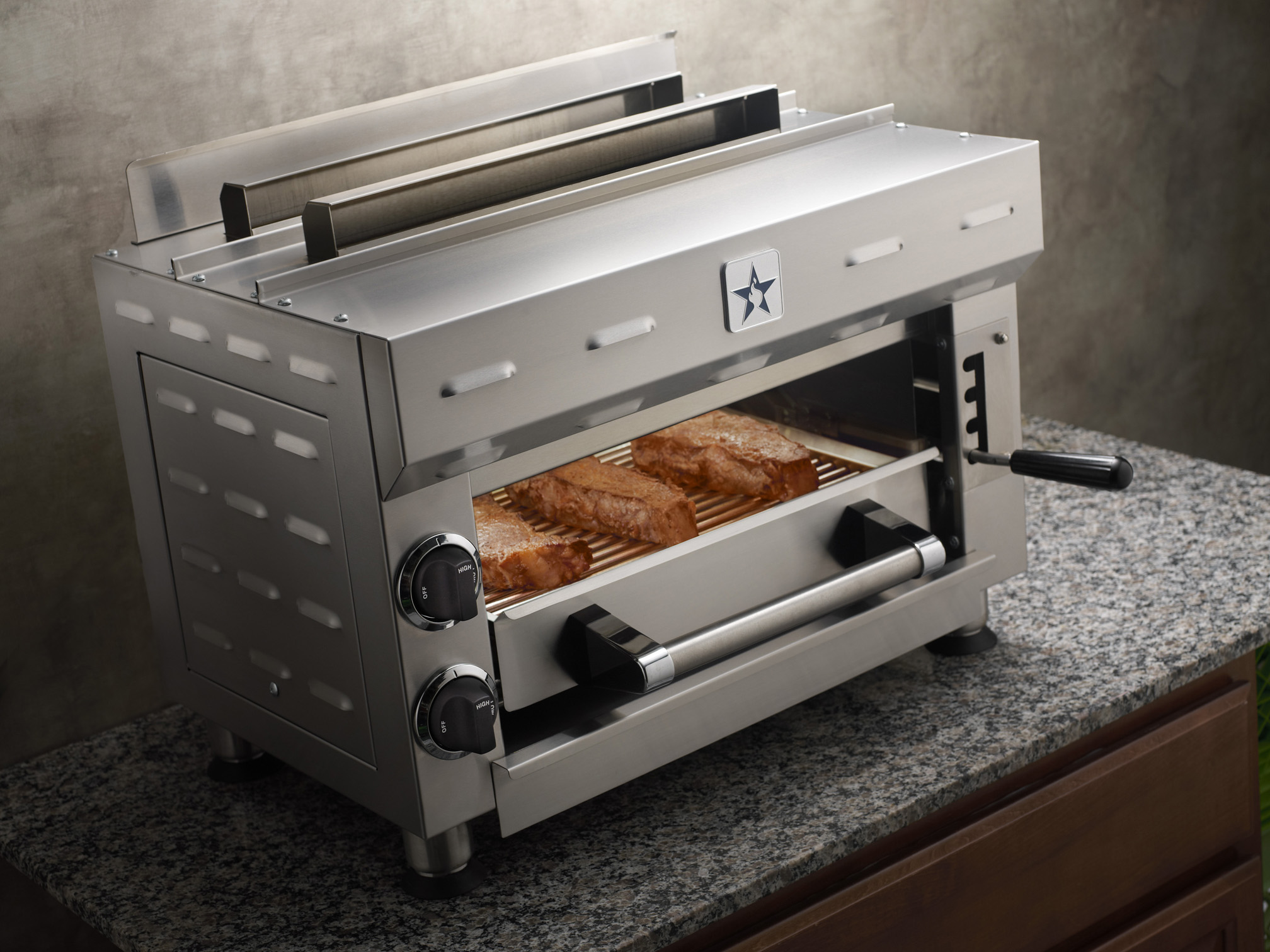
Image Source: cdn.avbportal.com
Deciphering the Culinary Salamander
The term “salamander” in a kitchen context might conjure images of mythical beasts or even the amphibian creature. However, in the culinary world, a salamander refers to a specific type of cooking appliance. It’s essentially a specialized broiler, designed to deliver intense, direct heat from above. This makes it perfect for a variety of tasks, from melting cheese to browning the tops of dishes.
What is a Salamander Broiler?
A salamander broiler is a heat-generating appliance found in professional kitchens. It typically features an open-fronted cavity with a powerful heating element positioned at the top. Unlike a conventional oven’s broiler, which is usually integrated into the oven cavity, a salamander is often a separate unit mounted above a range or on a countertop. Its primary purpose is to apply high, direct heat to food placed beneath its element. This allows chefs to quickly sear, brown, finish, or melt ingredients, adding that desirable crispy texture or caramelized flavor.
The Role of Salamander Cooking
Salamander cooking is all about precision and speed. The intense heat allows for rapid surface cooking without overcooking the interior of the food. This is crucial for dishes that require a beautiful golden-brown crust or a perfectly melted cheese topping. Imagine the crisp, bubbly cheese on a French onion soup, or the perfectly seared top of a crème brûlée – these are classic examples of what a kitchen salamander excels at. It’s an indispensable tool for adding that final touch that elevates a dish.
Key Functions of a Salamander Appliance:
- Browning: Achieving a golden-brown crust on meats, poultry, and vegetables.
- Melting: Quickly melting cheese or butter on dishes like gratins, nachos, or open-faced sandwiches.
- Caramelizing: Creating a rich, caramelized sugar crust on desserts like crème brûlée.
- Searing: Rapidly searing the surface of smaller items or finishing larger cuts of meat.
- Warming: Keeping finished dishes at serving temperature.
Fathoming the Salamander Grill
While often called a broiler, some designs of the salamander appliance incorporate a grill grate, leading to the term “salamander grill.” These units operate on the same principle of high, overhead heat but may offer more direct contact with the heat source via the grilling surface. This can be particularly useful for achieving distinct grill marks or for cooking items that might fall through a standard broiler rack. The versatility of a salamander grill broadens its applications, making it a valuable asset in a busy restaurant kitchen.
The Evolution of the Kitchen Salamander
The concept of applying intense heat from above to cook food is not new. Early cooking methods involved holding food over open flames or hot coals. As cooking technology advanced, so did the design of appliances that could replicate this effect more efficiently and controllably.
Historical Context of Overhead Heat
Before dedicated salamander units, chefs would often use specialized tools to position food directly under the hottest part of a hearth or oven. This manual process was effective but lacked consistency and required constant attention. The development of the salamander broiler was a significant step towards automating and refining this high-heat cooking technique.
Innovations in Salamander Design
Modern kitchen salamanders have evolved considerably from their rudimentary predecessors. Early models relied on gas burners, but today, both gas and electric versions are common.
- Gas Salamanders: These typically use powerful infrared burners that produce intense heat. They are often favored for their rapid heat-up times and powerful performance.
- Electric Salamanders: Electric models use heating elements, often quartz or ceramic, to generate heat. They offer precise temperature control and consistent heat distribution.
The design of the cooking surface has also seen innovation. While many restaurant salamanders feature a simple rack, others may include specialized pans or even grilling surfaces. The ability to adjust the height of the cooking surface relative to the heat source is a standard feature on most models, allowing chefs to fine-tune the cooking process.
Types of Salamanders
The diversity in the salamander appliance landscape means there are several types to consider, each suited for different kitchen needs.
Common Types of Salamanders:
- Wall-Mounted Salamanders: These are often installed above a range or cooking station. They are a popular choice for saving counter space.
- Countertop Salamanders: These units sit directly on a work surface and are typically more compact. They are ideal for smaller kitchens or for specific stations.
- Range-Mounted Salamanders: Some professional ranges come with an integrated salamander broiler as part of their design.
- Heavy-Duty Salamanders: Larger, more powerful units designed for high-volume professional kitchens, capable of handling more demanding cooking tasks.
The choice of salamander often depends on the available space, the type of cooking required, and the volume of food being prepared.
How a Salamander Works: The Science of Salamander Cooking
At its core, a kitchen salamander operates on the principle of radiant heat transfer. The powerful heating element at the top of the appliance emits infrared radiation, which directly heats the surface of the food placed beneath it.
The Heat Source: Mastering Salamander Heat
The “salamander heat” is characterized by its intensity and directness. Unlike convection ovens, which circulate hot air, or conventional broilers, which may have heat emanating from the bottom or sides, a salamander focuses its heat from above. This concentrated heat is crucial for achieving specific culinary results.
Components of a Salamander Heating System:
- Heating Element: This is the core of the appliance. In gas models, it’s typically an infrared burner. In electric models, it’s usually a resistive heating element made of materials like nichrome wire or quartz tubes.
- Reflector: Behind the heating element, a polished metal reflector helps to direct the emitted heat downwards towards the food.
- Grates or Trays: These hold the food. They are designed to allow heat to circulate around the food while also being sturdy enough to support various ingredients. Many have adjustable heights.
The Physics of Browning and Melting
The intense radiant heat from a salamander causes rapid chemical changes on the surface of the food.
- Maillard Reaction: This is a complex chemical process between amino acids and reducing sugars that occurs when food is heated. It’s responsible for the desirable brown color and savory flavors developed during cooking. The high, direct heat of a salamander accelerates the Maillard reaction on the surface of meats, vegetables, and bread.
- Caramelization: For foods containing sugars, like crème brûlée or glazes, the intense heat causes the sugars to caramelize, producing a sweet, slightly bitter, and deeply flavorful brown crust.
Practical Applications in a Restaurant Kitchen
In a busy restaurant setting, the speed and efficiency of a salamander make it an invaluable tool.
Daily Tasks for a Restaurant Salamander:
- Finishing Dishes: Adding a final browning or melting to dishes before serving.
- Broiling Appetizers: Quickly broiling items like escargots or stuffed mushrooms.
- Toasting Bread: Creating perfectly toasted slices for sandwiches or garlic bread.
- Melting Cheese: Achieving a bubbly, browned cheese topping on dishes like French onion soup or gratins.
- Reheating: Quickly reheating certain food items to maintain their texture and temperature.
The ability to quickly adjust the height of the food under the heat element allows chefs to control the intensity of the cooking, preventing burning while achieving the desired browning or melting.
Choosing the Right Salamander
When equipping a professional kitchen, selecting the appropriate salamander appliance is a key decision. The type of food prepared, the volume of service, and the available kitchen space all play a role in this choice.
Factors to Consider When Buying a Salamander
- Power Source: Decide between gas or electric based on your kitchen’s infrastructure and preference for heat control.
- Mounting Options: Will it be wall-mounted, countertop, or integrated into a range?
- Size and Capacity: Consider how much food you’ll be cooking at once.
- Heat Control and Adjustability: Look for models with adjustable shelf heights and precise temperature controls.
- Durability and Build Quality: Professional kitchens demand robust appliances that can withstand heavy use.
- Ease of Cleaning: A well-designed salamander should be easy to clean and maintain.
Comparing Different Types of Salamanders:
| Type of Salamander | Typical Mounting | Pros | Cons | Best For |
|---|---|---|---|---|
| Wall-Mounted | Wall/Above Range | Saves counter space, good for high-volume cooking. | Requires professional installation, less portable. | Busy restaurants, kitchens with limited counter space. |
| Countertop | Countertop | Portable, easy to install, good for smaller kitchens or specific tasks. | Takes up counter space, can be less powerful than wall-mounted units. | Smaller restaurants, catering, specialized cooking stations. |
| Range-Integrated | Built into Range | Space-saving, convenient if purchasing a new range. | Limited flexibility, tied to the range. | Restaurants purchasing new ranges, kitchens prioritizing integration. |
| Heavy-Duty/Commercial | Varies | High power, large capacity, built for extreme durability. | Expensive, requires significant space and ventilation. | High-volume production kitchens, steakhouses. |
The Importance of Salamander Heat Control
Effective salamander cooking hinges on controlling the salamander heat. The ability to adjust the distance between the food and the heating element is paramount. This allows chefs to:
- Prevent Burning: Moving food further from the heat source.
- Accelerate Browning: Moving food closer to the heat source.
- Melt Uniformly: Maintaining a consistent distance for even melting.
Many professional salamander units feature adjustable shelves or racks that can be moved up and down. Some advanced models might even offer variable heat settings for the element itself.
Maintaining Your Salamander Appliance
Like any piece of kitchen equipment, proper maintenance is crucial for the longevity and performance of your salamander appliance. Regular cleaning and checks will ensure it operates efficiently and safely.
Daily Cleaning Practices
After each use, a thorough cleaning is recommended.
- Cool Down: Ensure the salamander has cooled down completely before cleaning.
- Remove Racks and Trays: Wash these removable parts in warm, soapy water. For stubborn residue, a non-abrasive scrubber might be needed.
- Wipe Down Interior: Use a damp cloth to wipe down the interior surfaces. For grease buildup, a mild degreaser can be used, followed by a clean damp cloth.
- Clean Exterior: Wipe down the exterior surfaces with a damp cloth.
Periodic Maintenance and Checks
Beyond daily cleaning, periodic checks are important.
- Inspect Heating Elements: For electric models, visually inspect the heating elements for any signs of damage or corrosion.
- Check Gas Burners (Gas Models): Ensure burners are clean and free of debris that could affect flame distribution.
- Grease Traps: Many salamanders have grease traps that need to be emptied and cleaned regularly to prevent fire hazards.
- Ventilation: Ensure the ventilation system around the salamander is clear and functioning properly.
Safety First: Always refer to the manufacturer’s manual for specific cleaning and maintenance instructions. Never attempt to repair a faulty salamander yourself; contact a qualified service technician.
Frequently Asked Questions (FAQ)
Q1: What is the difference between a salamander and a broiler?
A1: While often used interchangeably, a salamander is a specific type of broiler characterized by its overhead, intense heat source, usually in a separate unit. Conventional oven broilers are integrated into the oven cavity. Salamanders are generally more powerful and designed for faster, more focused cooking.
Q2: Can I use a salamander for baking?
A2: No, a salamander is not designed for baking. Its primary function is to apply intense top-down heat for broiling, browning, melting, and searing. Baking requires even heat distribution from all sides, which a salamander does not provide.
Q3: How hot does a salamander get?
A3: Salamanders typically operate at very high temperatures, often exceeding 600°F (315°C), and can reach upwards of 1000°F (538°C) or more depending on the model and gas or electric power.
Q4: What kind of food is best cooked in a salamander?
A4: Foods that benefit from quick browning, melting, or caramelization are ideal. This includes items like French onion soup (for melting cheese), crème brûlée (for caramelizing sugar), steaks (for a quick sear), sandwiches (for melting cheese), and various gratin dishes.
Q5: Is a salamander necessary for a home kitchen?
A5: While not essential for home cooking, a salamander can be a valuable addition for enthusiasts who enjoy replicating restaurant-quality finishes on their dishes. Many home cooks opt for a good quality oven broiler or a dedicated countertop broiler as alternatives.
Q6: How do I clean a salamander grill?
A6: Cleaning a salamander grill involves allowing it to cool, removing and washing racks and trays, wiping down the interior with a damp, degreasing cloth, and ensuring the exterior is clean. Refer to the manufacturer’s manual for specific instructions.