What is the standard kitchen counter height? The standard kitchen counter height in most homes is 36 inches from the floor to the top of the countertop. This height is designed to accommodate a wide range of people and tasks, but finding the perfect height for you involves a bit more consideration.
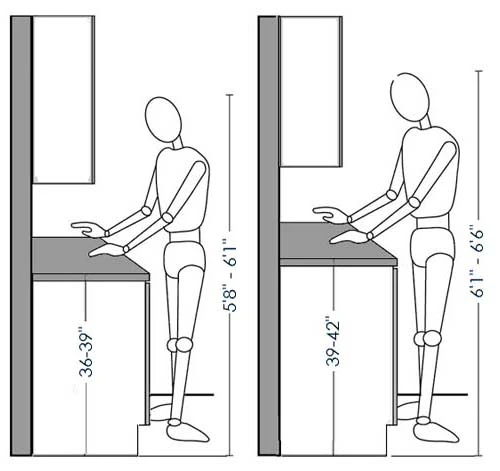
Image Source: www.regattaexports.com
The Foundation: Standard Kitchen Counter Height and Its Purpose
The 36-inch mark for kitchen counter height isn’t an arbitrary number. It’s a result of decades of ergonomic research and practical application. This height aims to strike a balance, allowing most adults to chop vegetables, mix ingredients, and prepare meals without excessive stooping or reaching. Think of it as a starting point, a universally accepted measure that makes sense for the average person.
When we talk about countertop height dimensions, we’re generally referring to the finished surface. This includes the thickness of the countertop material itself. So, if you have a 3-centimeter thick granite slab, the base cabinet beneath it will be closer to 33 inches.
Why This Height Works for Many
- Ergonomics: For individuals of average height (around 5’7″ to 5’10”), the 36-inch counter provides a comfortable elbow angle for most kitchen tasks. This reduces strain on your back and shoulders.
- Appliance Integration: Standard base cabinets, typically 34.5 inches high, are designed to accommodate standard 35-36 inch high appliances like dishwashers and ovens, ensuring a seamless fit. This means the standard cabinet height plays a crucial role in achieving the overall kitchen work surface height.
- Accessibility: It allows for easy placement of standard-sized sinks and cooktops, which are engineered with this countertop height in mind.
Beyond the Standard: Finding Your Ideal Kitchen Counter Height
While 36 inches is the benchmark, personal comfort and specific needs can lead you to deviate. Your own stature, the types of tasks you perform most frequently, and even your preferred cooking style can all influence the ideal kitchen counter height.
Factors to Consider for a Comfortable Kitchen Counter Height
-
Your Height: This is perhaps the most critical factor.
- Shorter Individuals (Under 5’5″): You might find a slightly lower counter, perhaps 34-35 inches, more comfortable for chopping and kneading. This reduces the need to hunch over.
- Taller Individuals (Over 5’10”): A higher counter, around 37-38 inches, can prevent you from bending too much, which is better for your back.
-
Task-Specific Needs:
- Baking: Many bakers prefer a slightly lower surface for tasks like rolling out dough, as it allows for better leverage.
- Chopping and Prep: This is where the elbow-to-countertop relationship is key.
- Appliance Use: Consider the height of appliances you’ll be working around, like a built-in oven or microwave.
-
Household Dynamics: If multiple people of varying heights use the kitchen, you might opt for a compromise or consider different zones with varied heights.
Measuring for Your Perfect Fit
To determine your ideal kitchen work surface height, stand comfortably with your arms relaxed at your sides. Bend your elbows to a 90-degree angle, as if you were chopping vegetables. Measure the distance from the floor to your bent elbow. The ideal countertop height will be approximately 3-6 inches below this point.
Example: If your elbow is 42 inches from the floor, a 36-inch counter would place it 6 inches below your elbow, which is a good starting point. If you prefer to bend your elbows more, a 35-inch counter might be better. If you want to stand more upright, a 37-inch counter could be the answer.
Exploring Kitchen Counter Dimensions: Depth and Overhang
Beyond height, other dimensions of your countertops are crucial for functionality.
Standard Kitchen Counter Depth
The standard kitchen counter depth is typically 25 inches for base cabinets. This measurement is from the front edge of the cabinet to the back. This depth is designed to accommodate standard drawer slides, internal workings of cabinets, and provides ample space for appliances and workspace.
When you add the countertop material, the total depth usually reaches about 25.5 inches. This ensures that the countertop extends slightly beyond the cabinet box.
The Importance of Kitchen Counter Overhang
The kitchen counter overhang refers to the portion of the countertop that extends beyond the front of the cabinet.
- Standard Overhang: A typical kitchen counter overhang is 1.5 inches. This provides enough space for your fingers to grip the edge when opening drawers or cabinet doors and prevents your knuckles from hitting the cabinet face when working at the counter.
- Seating Overhang: If you plan to use your countertop for seating (e.g., on a kitchen island), the overhang needs to be more substantial. For comfortable seating, a 10-12 inch overhang is usually recommended to allow enough legroom for stools.
Kitchen Island Height: A Different Consideration?
Kitchen island height can often be the same as your main countertops (36 inches), but it also presents opportunities for variation.
- Unified Surface: Keeping the kitchen island height the same as the main countertops creates a cohesive and flowing workspace.
- Multi-Level Islands: You might opt for a multi-level island, with a higher section for bar seating (e.g., 40-42 inches for counter-height stools) and a lower section for food preparation (matching the average kitchen counter height of 36 inches). This offers versatility and distinct zones.
- Table-Height Islands: Some islands are designed as dining tables, often around 30 inches high, which is standard dining table height. This can be a great way to integrate dining and prep areas.
Countertop Material and Thickness: Impacting the Final Height
The material you choose for your countertops can affect the final countertop height dimensions.
- Standard Thickness: Most countertop materials come in standard thicknesses of ¾ inch (2 cm) and 1 ¼ inch (3 cm).
- Impact on Total Height: If your base cabinets are 34.5 inches and you choose a 1 ¼ inch thick countertop, the total kitchen counter height will be 35.75 inches, very close to the 36-inch standard. Thicker materials will result in a slightly higher finished surface.
Table: Common Countertop Materials and Their Typical Thickness
| Countertop Material | Typical Thickness (inches) | Notes |
|---|---|---|
| Granite | ¾, 1 ¼ | Very durable, widely available. |
| Quartz | ¾, 1 ¼ | Engineered, consistent patterns, very durable. |
| Marble | ¾, 1 ¼ | Softer, prone to etching and staining. |
| Butcher Block | 1 ½, 2, 3 | Warm look, requires maintenance. |
| Laminate | ¾ | Budget-friendly, wide range of designs. |
| Solid Surface | ½, ¾, 1 ¼ | Seamless look, repairable. |
| Stainless Steel | 1 ½, 2 | Durable, hygienic, modern look. |
When calculating your countertop height dimensions, always factor in the thickness of your chosen material.
Customization for Your Unique Needs
The beauty of renovation or custom kitchen design is the ability to tailor every element to your preferences.
Adjusting Standard Cabinet Height
While standard cabinet height is typically 34.5 inches, custom cabinet makers can adjust this to achieve your desired kitchen counter height. If you’re opting for a non-standard height, communicate this clearly with your cabinet maker and countertop fabricator.
Building Up Countertops
If you’re working with existing cabinets and want a slightly higher counter, you can add a supporting layer beneath the countertop. Plywood or a substrate can be used to raise the surface by an inch or two.
Lowering Counters
Achieving a lower counter usually requires custom-built base cabinets or modifying existing ones.
Ergonomics in the Kitchen: Maximizing Comfort and Efficiency
A well-designed kitchen isn’t just about aesthetics; it’s about creating a functional and comfortable space. The kitchen work surface height is a cornerstone of kitchen ergonomics.
The Elbow Rule: A Practical Guide
As mentioned earlier, the elbow rule is a simple yet effective way to gauge comfort. Stand upright, relax your shoulders, and bend your elbows to 90 degrees. The ideal workspace should be 3-6 inches below your bent elbow. This allows for a natural posture while performing most kitchen tasks.
Task Zones and Height Considerations
- Primary Prep Area: This is where you’ll do most of your chopping, dicing, and mixing. This area should be optimized for your comfortable kitchen counter height.
- Baking Station: As noted, slightly lower might be preferred by bakers.
- Sink Area: The depth and height of your sink basin can also influence the perceived height of your work surface. Undermount sinks can slightly lower the effective counter height compared to drop-in sinks.
- Appliance Integration: Ensure that the height works well with your cooktop, dishwasher, and other built-in appliances.
Accessibility and Universal Design
Considering different users in the kitchen promotes accessibility and universal design principles.
- Wheelchair Accessibility: For individuals using wheelchairs, a lower countertop height of around 30-34 inches is often recommended, with clearance underneath for the chair.
- Elderly Users: Older adults may benefit from slightly higher counters to reduce bending and reaching.
Common Questions About Kitchen Counter Height
FAQ
Q1: What is the standard kitchen counter height in inches?
A1: The standard kitchen counter height is 36 inches from the floor to the top of the countertop.
Q2: Can I have different kitchen counter heights in my kitchen?
A2: Yes, you can absolutely have different kitchen counter heights. This is often done for ergonomic reasons or to create distinct zones for different tasks, such as a lower baking station or a higher bar area on a kitchen island.
Q3: How do I determine my ideal kitchen counter height?
A3: Stand comfortably, bend your elbows to 90 degrees, and measure the distance from the floor to your bent elbow. Your ideal counter height will be about 3-6 inches below that measurement.
Q4: What is the standard kitchen counter depth?
A4: The standard kitchen counter depth for base cabinets is 25 inches, with the countertop typically extending about half an inch, making the total depth around 25.5 inches.
Q5: How much overhang should a kitchen counter have?
A5: A standard kitchen counter overhang is typically 1.5 inches. For seating on a kitchen island, a 10-12 inch overhang is recommended for legroom.
Q6: Does the thickness of my countertop material affect the height?
A6: Yes, the thickness of your countertop material directly adds to the overall countertop height dimensions. A thicker material will result in a higher finished kitchen work surface height.
Q7: What is the average kitchen counter height for baking?
A7: Many bakers prefer a slightly lower counter, often around 30-34 inches, which allows for better leverage when rolling dough. However, this is a personal preference.
Q8: What is the standard cabinet height?
A8: The standard cabinet height for base cabinets is typically 34.5 inches, designed to meet the 36-inch standard kitchen counter height when a standard thickness countertop is installed.
Q9: How high should my kitchen island height be if I want bar seating?
A9: For comfortable bar seating, a kitchen island height of 40-42 inches is generally recommended to accommodate counter-height stools.
Q10: Is a 35-inch kitchen counter height a good option for shorter people?
A10: Yes, a 35-inch kitchen counter height can be very comfortable for shorter individuals, as it reduces the need to stoop when working.
Conclusion: Your Kitchen, Your Comfort
The standard kitchen counter height of 36 inches is a great starting point, but it’s not the end of the story. By considering your personal height, the tasks you perform most, and the overall design of your kitchen, you can determine the perfect kitchen counter height that makes cooking and spending time in your kitchen a truly enjoyable experience. Don’t be afraid to deviate from the standard to create a space that feels perfectly tailored to you, ensuring a comfortable kitchen counter height for years to come.